FOLLOW OUR WORK
Insights & Reflections
A curated series on leadership, authority, and group life — as they emerge.
Introduction to Group Relations & Leadership
This clear and succinct introduction to both the theory of group relations and its practice in Group Relations Conferences (GRCs) outlines the scope of the territory...
The distinction between group relations as a framework based on psychoanalytic thinking and open systems theory versus a methodology using institutional practices embedded into GRCs is explored in depth.
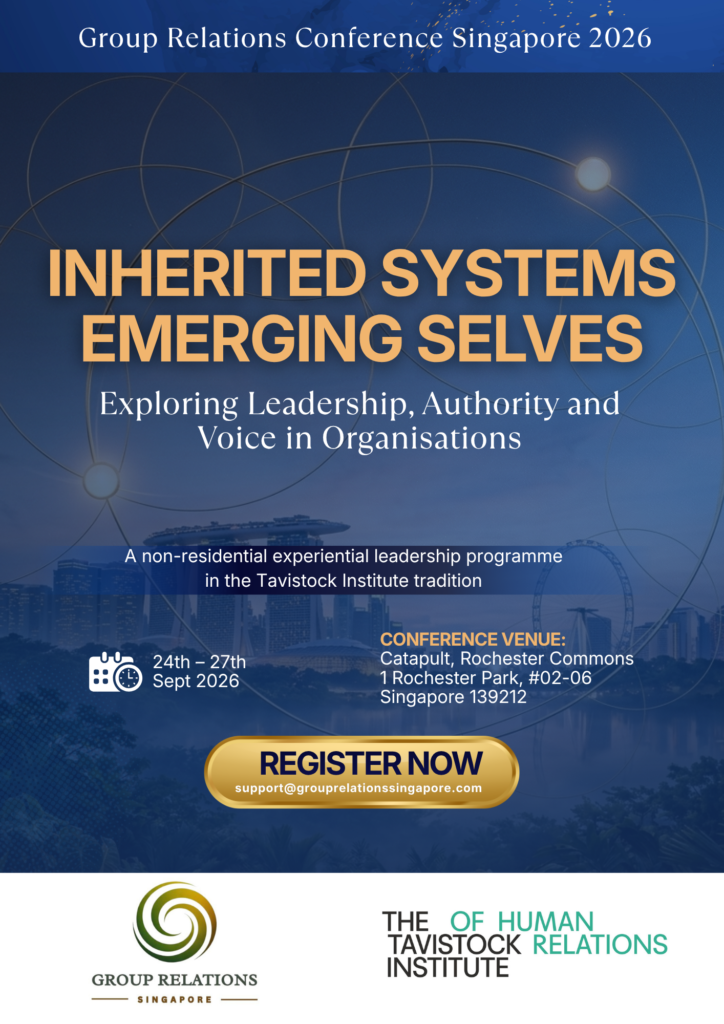
To experience a GRC in the flesh, consider participating in Group Relations Conference Singapore 2026 — September 24–27.

Kartikeyan V: Reflection on the conference theme
The conference theme, “Inherited Systems, Emerging Selves,” strikes me as deeply resonant with the lived reality of leadership today. Leaders carry invisible inheritances from family, class/caste, religion, gender, organizations, professions, and nations.
These inherited systems shape how authority is exercised and how voice is permitted or silenced. Often we assume autonomy while remaining influenced by deeper systems.
The tension between inheritance and emergence is central to leadership. What in us belongs to the past, and what is still forming? Leadership becomes a negotiation between established identities and emerging possibilities.
To explore further, consider joining Group Relations Conference Singapore 2026 — September 24–27.
https://grouprelationssingapore.com/grouprelationssingapore2026/
Learn More
Tavistock Institute Animation Intro to Group Behaviour (~7:25–10:10) — 23 June
This animated excerpt introduces core ideas in group behaviour, focusing on how leadership, authority, and group dynamics emerge within systems.
The segment highlights how individuals in groups are influenced by unconscious processes, roles, and collective behaviour patterns that shape decision-making and interaction.
Watch the full video at the linked timestamp:
https://youtu.be/dvnBSJCHYu0?si=JyJdBFRLS6-5dFGo&t=445